
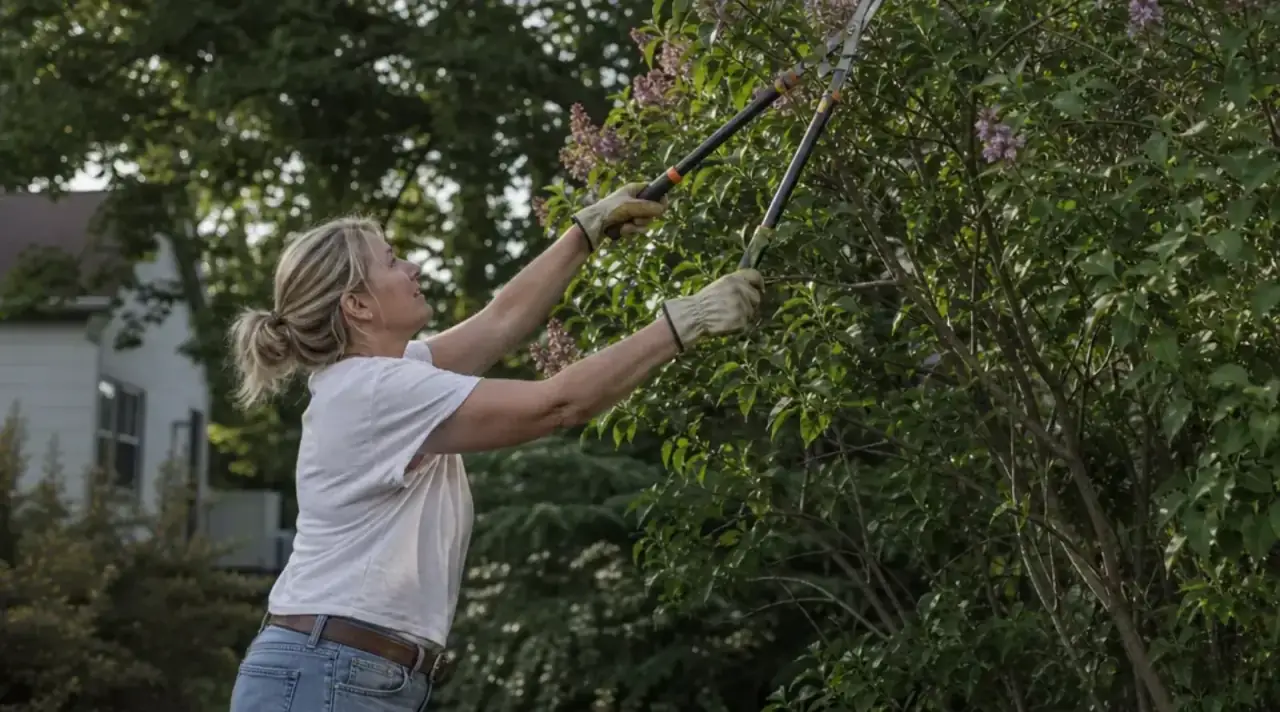
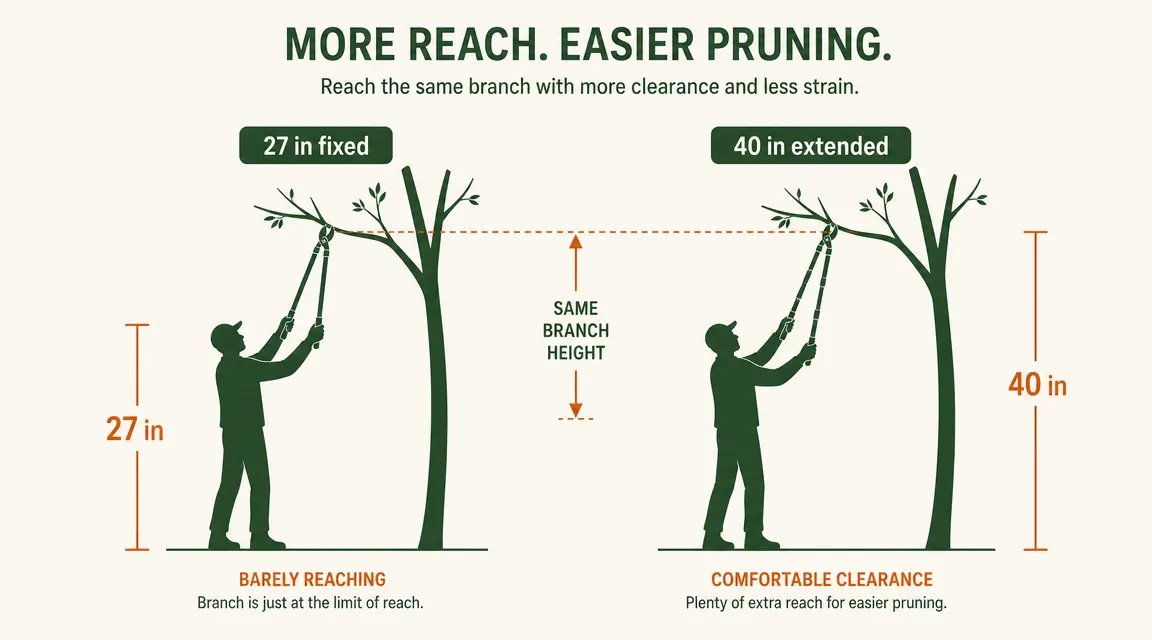
I have owned two fixed-length loppers in the past decade. Both were 28 inches. Both were fine, right up until the moment I needed three more inches of reach, or found myself contorting sideways to get an angle that the fixed handle would never allow. The third lopper I bought was a TABOR TOOLS GG21A, and it adjusts from 27 to 40 inches. That range sounds like a small thing until you realize it covers nearly every situation a suburban yard throws at you.
If you are on the fence about whether a telescoping lopper is worth the extra cost over a fixed-length model, here are 10 concrete reasons the adjustable design pays off.
The branch you cannot reach is the one that comes back thickest next year.
The TABOR TOOLS GG21A extends from 27 to 40 inches with compound-action blades rated to 1.5 inches. Rated 4.8 stars across 11,000+ reviews. Check today's price before it shifts.
Amazon Check Today's Price on Amazon →You Get Two Loppers in One Handle
At 27 inches the GG21A works like a standard lopper for dense shrubby cuts close to the base. At 40 inches it functions more like a long-reach pruner, getting into the canopy of a young fruit tree or the back of a six-foot lilac without a ladder. One tool covers both use cases. For most suburban yards, that eliminates the need for two separate tools. If you want to read more about how the GG21A performed over a full growing season, see our <a href="/tabor-tools-lopper-review-long-term">TABOR TOOLS GG21A long-term review</a>.
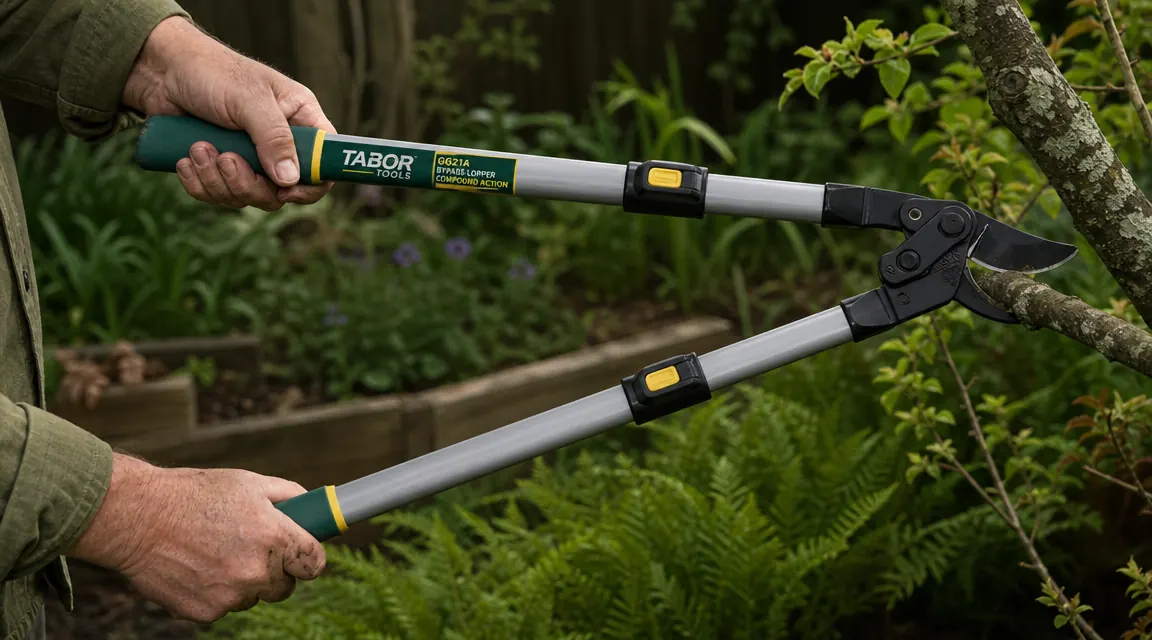
Compound Action Multiplies Your Cutting Force
Telescoping handles alone would not move the needle much if the blade mechanism were ordinary. The GG21A uses a compound-action head that routes the lever force through two pivot points instead of one. On a 1.25-inch wisteria cane, the difference is measurable. You are not grinding through the branch, you are cutting it. That matters particularly when the handle is at full extension and your grip leverage is already reduced.
Less Shoulder Strain on Overhead Work
With a fixed 28-inch lopper you end up on your toes, arms raised at full stretch, fighting the weight of the tool just to get the blade on the branch. Extend the GG21A to 38 or 40 inches and you can stand flat-footed, arms at a comfortable angle, and let the tool do the reaching. That posture difference over an hour of shrub work means you can keep going longer without the shoulder ache that ends most pruning sessions early.
It Handles the In-Between Branch Diameter That Defeats Pruners
A hand pruner tops out around 3/4 inch. A heavy-duty lopper is overkill on anything under 1 inch. The GG21A is rated to 1.5 inches, which covers the real problem range: the branch that has been growing for three years and is now too thick for your pruner but not thick enough to justify hauling out a saw. That 1-to-1.5-inch zone is exactly where overgrown shrubs live.
Bypass Blades Make a Clean Cut That Actually Heals
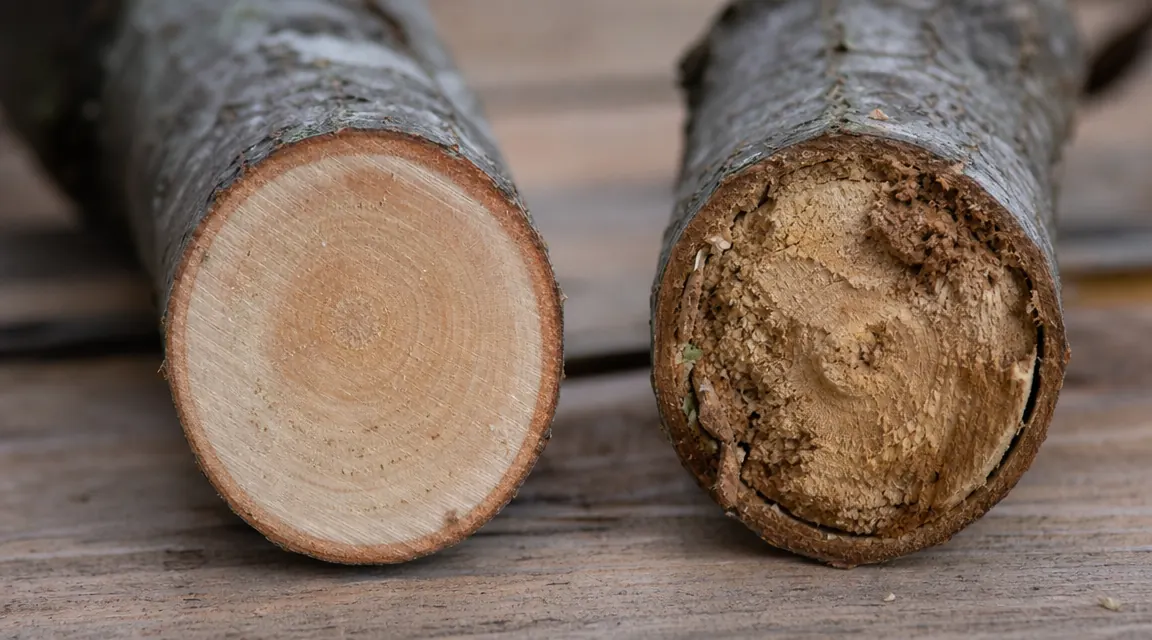
The GG21A is a bypass lopper, not an anvil. Anvil loppers press a single blade straight down into the branch. They crush the tissue on one side, which creates a wound that heals slowly and invites disease. A bypass cuts the branch between two blades like scissors, leaving a clean edge. If you are cutting hydrangeas, roses, or any woody shrub you care about keeping healthy, the bypass design matters more than the telescoping feature. Our comparison article breaks down how the GG21A stacks up against the Fiskars lopper on this exact point: <a href="/tabor-tools-lopper-vs-fiskars-lopper">TABOR TOOLS GG21A vs Fiskars Lopper</a>.
The Lock Collar Holds Extension Under Load
A telescoping handle that slips under cutting pressure is worse than useless. The GG21A uses a twist-lock collar that cinches down firmly. In a full season of use on overgrown shrubs I never had the handle slide mid-cut. That is the thing to check on budget extendable loppers: whether the extension holds when you are actually leaning into the cut. On the GG21A, it does.
Aluminum Shafts Keep the Weight Honest
At full 40-inch extension, weight distribution matters. The GG21A uses aluminum shafts, not fiberglass. Fiberglass is cheaper to produce but adds noticeable weight when the handle is long. Aluminum keeps the overall tool weight low enough that extended overhead work stays manageable. The GG21A comes in at around 2.4 lbs, which is in the middle of the field for this class of lopper. Not featherweight, but not the kind of weight that makes your arms give out after 15 minutes overhead.
Non-Slip Grip Handles the Sweat and Dew
Morning shrub work means wet handles. The GG21A has rubberized, non-slip grip material on both handles. This is not a minor detail. A lopper that twists in your hand on a wet branch is a lopper that makes a bad cut and occasionally takes a chunk out of the wrong branch. Dry grip contact at full extension gives you accurate blade placement even when conditions are not ideal.
Storage Is Easier Than With a Full-Size Fixed Lopper
A fixed 40-inch lopper is awkward to hang in a standard tool cabinet or shed corner. The GG21A collapses to 27 inches, which fits in the same wall space as a standard lopper but gives you a full foot more reach when you need it. It is a minor quality-of-life point, but if you have a small shed or a garage with limited vertical storage, collapsing down makes a genuine difference.
The Price Is Fair for What the Tool Does
The GG21A sits in the mid-range for bypass loppers, above the $20 hardware store imports and well below the pro-grade European models. At that price point it delivers compound action, telescoping reach, bypass blades, and aluminum construction. The 4.8-star rating across more than 11,000 reviews over several years is a reliable signal that the tool holds up past the first season, which is where budget loppers typically start showing their limits. Check today's price to see where it currently sits.
What I Would Skip
An extendable lopper is not the right tool for every branch. For anything over 1.5 inches in diameter, you need a pruning saw, and no amount of compound action changes that math. The GG21A is also not a substitute for a good hand pruner on fine detail work, deadheading, or cutting back soft-stemmed perennials. Use it in its range, roughly 0.75 inches to 1.5 inches and in situations where reach or angle are the limiting factor, and it earns its place. Try to use it as an all-purpose cutter and you will be disappointed.
The branch you skip because you cannot quite reach it grows back thicker next year. A 40-inch reach means fewer branches that get away from you.
One lopper that covers the whole range of what a suburban yard actually needs.
The TABOR TOOLS GG21A telescopes from 27 to 40 inches, cuts up to 1.5-inch branches with compound-action bypass blades, and stores in the same wall space as a fixed lopper. 4.8 stars, 11,000+ buyers. Check today's price before it moves.
Amazon Check Today's Price on Amazon →