

I have owned exactly three pairs of bypass pruners that lasted less than a single season. The first pair bent at the pivot the first time I tried to cut a mature rose cane. The second pair had a blade that looked sharp in the store and was dull within six weeks. The third developed a wobble at the locking mechanism so bad that every cut ended up slightly crushed rather than clean. After the third one went into the trash, my neighbor Donna, who has been growing fruit trees since before I had a yard, looked over the fence and said one word: Felco. That was two seasons ago. The Felco F5 has been in my back pocket or sitting on top of my potting bench for every garden task since.
The F5 is Felco's large-hand version of the classic F2. Same Swiss-made hardened steel blade, same forged aluminum handles, same replaceable parts system, but scaled up in grip size and overall length for gardeners with bigger hands. It runs 8.9 inches long, weighs 8.5 ounces, and handles cutting capacity up to 1.2 inches diameter. That spec matters. I have roses with established canes that push close to that limit, and the F5 handles them without the handles twisting apart or the blade deflecting.
The Quick Verdict
The Felco F5 is the real deal for home gardeners who prune roses, fruit trees, and woody shrubs regularly. The steel holds an edge far longer than anything under $30, and the replaceable-parts design means you are buying a tool you can actually maintain for years.
Amazon Check Today's Price →Your roses are getting crush-cut every time you squeeze that cheap pruner. The F5 fixes that.
The Felco F5 is Swiss-made, uses hardened steel that stays sharp through a full season, and every single part is replaceable. Check today's price on Amazon before your next pruning session.
Amazon Check Today's Price on Amazon →How I Have Used It
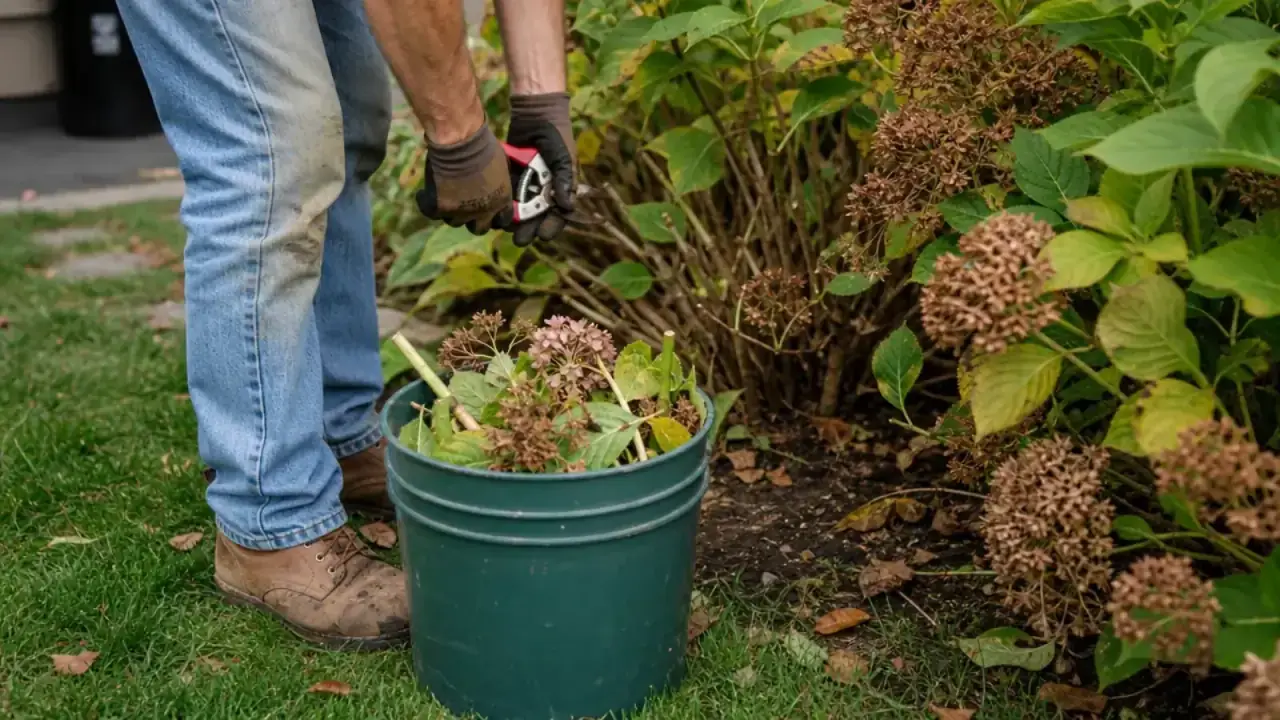
My garden is a suburban quarter-acre with six established rose bushes (three hybrid teas, two climbers, one rugosa), a 12-year-old semi-dwarf apple tree, a wall of ornamental grasses I keep cut back hard every March, and a row of Annabelle hydrangeas along the back fence. The Felco F5 has handled all of it. In the first season I was pruning the roses twice weekly during peak growth, cutting spent hydrangea heads as they faded, managing apple suckers, and doing the late-fall hard cutback on everything woody. Second season was more of the same, plus I started deadheading a patch of salvias I added to the front border. Rough estimate: this pruner has made somewhere between 800 and 1,000 cuts across two seasons.
I also left it out in the rain twice by mistake. Once for about four hours during a thunderstorm, once overnight when I forgot it on the potting bench. Both times I dried it off, hit the blade with a quick pass of lubricating oil, and it was fine. That matters to me. A tool that rusts the first time you leave it out is not a practical garden tool for anyone who actually uses their hands in the dirt on a regular basis.
The handles are forged aluminum with a red powder coat finish. After two seasons the finish is scratched in several places and there are two small dings from where the pruner got knocked off the bench onto concrete. None of that affects performance. The grip swell on the lower handle gives your fingers a natural stop so the tool does not slide forward during a cut. I wear a size large glove and the grip feels right. If you are in a medium or smaller, Felco makes the F2 in a size that fits better.
The Blade and Steel: What Felco Gets Right
The cutting blade on the F5 is hardened, high-carbon steel with a precision-ground bevel edge. Felco does not publish the exact Rockwell hardness or steel alloy grade, which is a marketing gap they have not bothered to fill, but the performance tells you something real: I sharpened this blade once in two full seasons. One pass with a whetstone in late April of year two to touch up the edge after heavy March cutbacks. That is it. My old pruners needed touching up every few weeks if I wanted a clean cut.
The counter blade, the flat one that backs the cut, is made of hardened steel as well and has a sap groove cut into it. That groove matters more than it sounds. Without it, fresh sap builds up on the blade during a long pruning session and starts to create drag that makes every cut slightly harder than it should be. The sap groove channels that buildup away from the cutting edge so your fiftieth cut is about as easy as your fifth. I noticed this most clearly during a heavy rose pruning session in late spring when I cut probably 150 stems in under an hour. No drag, no buildup.
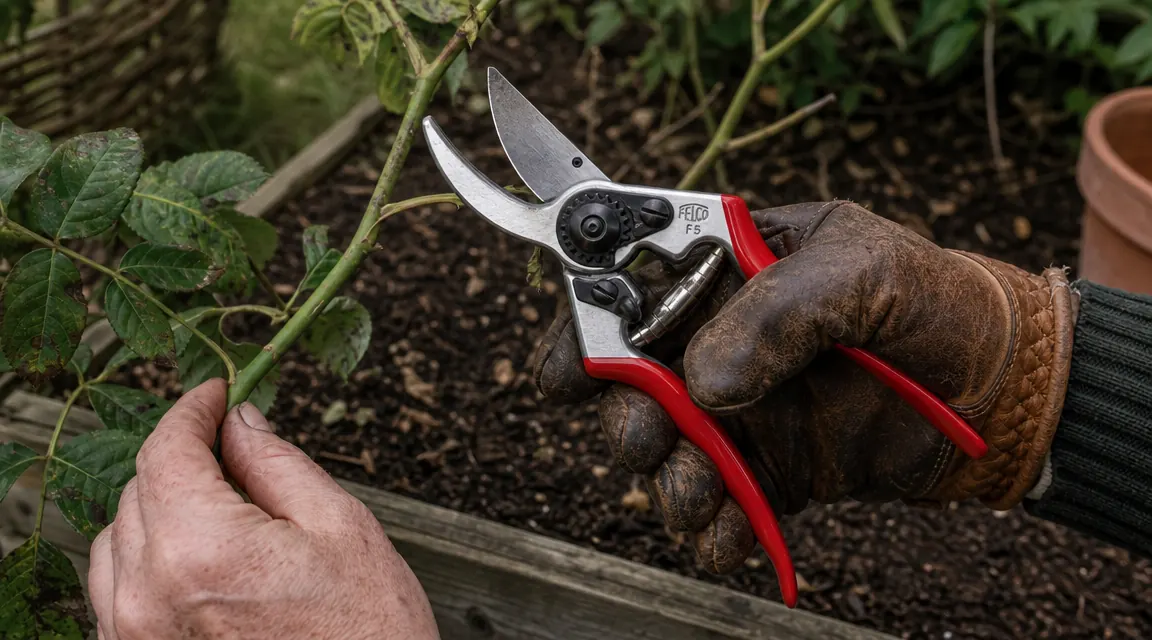
The blade pivot is adjustable. There is a small nut and bolt at the center of the tool, and you can tighten or loosen it to tune the blade tension. Out of the box it was a touch loose for my preference. Two minutes with a small wrench and it was exactly right. I have not had to readjust it since. That kind of precision adjustment on a hand tool at this price point is not something you get from any $18 pruner at the hardware store.
Cutting Capacity and Real-World Performance
Felco rates the F5 at 1.2 inches maximum cutting diameter. I tested that claim with apple tree suckers and a few older rose canes. Honestly, for clean one-cut results, I stay under about 0.9 inches. Above that, you can still make the cut but it takes more hand force and the resulting wound is less clean. That is consistent with what Felco's rating means, which is the maximum it can cut, not the ideal working range. For branches in the 0.5 to 0.9 inch range, cuts are clean, fast, and leave a smooth wound surface that heals quickly. For anything genuinely thicker than an inch, you are better served by a lopper.
The spring mechanism, a coiled steel spring between the handles, reopens the blade automatically after each cut. I have read complaints from other reviewers that this spring can fatigue over time. Mine has not. After two seasons it still has the same return force it had when the pruner was new. If it ever does go, Felco sells replacement springs separately, and installation takes about three minutes.
After 800-plus cuts across two seasons, the blade still sharpens up with one pass of a whetstone. That is the whole argument for spending real money on a real pruner.
The Replaceable Parts Argument
The marketing line on Felco pruners is that they are built to last a lifetime because every part is replaceable. That is mostly true and worth understanding before you decide whether the price is justified. Felco sells individual blades, counter blades, springs, pivot bolts, handle grips, and wire-cutting notches for the F5. The blade alone costs around $18 to $20, which means you can restore a worn F5 to brand-new cutting performance for about half what the whole tool costs. No cheap pruner offers that. When the $18 pruner is dull, you buy another $18 pruner. When the Felco is dull, you sharpen it or replace the blade.
The wire-cutting notch near the base of the blade is a secondary feature I use more than I expected. It is designed to cut light gauge wire cleanly, which sounds niche until you are trying to remove old plant ties from a trellis without switching tools. It handles 14-gauge and smaller without any problem. I tried 12-gauge once and it left a small nick in the notch. Not recommended for anything heavier than 14-gauge.
What I Did Not Like
The lock mechanism is a rotating lever that sits on the lower handle. You push it forward to lock the blade closed for storage and travel. It works reliably, but it takes a deliberate two-finger pinch to release. When your hands are dirty or wet, which in a garden is most of the time, the release is not as easy as it should be. A couple of times I have fumbled with it for several seconds with muddy gloves before getting it to release. This is a minor complaint but worth knowing if you are constantly opening and closing the tool during a long pruning session. It does not rise to the level of a design flaw, but it is not the most intuitive locking mechanism I have used.
The other thing I will say honestly: the F5 is sized for large hands. If you have medium or small hands, the grip diameter may feel slightly thick and your cutting leverage will be reduced. Felco offers the F2 for average hands and the F6 for smaller hands. Get the right size for your grip. A pruner that does not fit your hand is a pruner that is going to fatigue you, and hand fatigue leads to sloppy cuts.
What I Liked
- Hardened steel blade holds an edge through a full season of regular use
- Blade pivot is adjustable, letting you tune tension to your preference
- Sap groove on the counter blade keeps the cutting edge clean through long sessions
- Every part is individually replaceable, including blade, spring, and grips
- Wire-cutting notch handles 14-gauge and smaller cleanly
- Comfortable grip swell positions large hands naturally without slipping forward
- Survived two unplanned rain exposures without any corrosion or performance loss
Where It Falls Short
- Lock release is stiff and takes deliberate two-finger pressure, harder with wet or dirty gloves
- Sized specifically for large hands; medium or small hands should choose F2 or F6
- Felco does not publish steel alloy or hardness specs, so you are trusting performance over paper
- Maximum 1.2-inch capacity is the absolute limit; clean cut performance drops above 0.9 inches
How It Compares to What I Used Before
Before the Felco I was cycling through whatever hardware store pruner was on sale, mostly in the $15 to $22 range. Two of those had stamped steel blades, one had a fiberglass handle that cracked along the seam. None lasted more than eight months of regular use. The F5 has now lasted twice that and shows no meaningful wear on the blade or the pivot. That math works out clearly. Spending less on tools that fail is more expensive than spending more on a tool that lasts. If you are comparing the F5 against a Fiskars bypass pruner, that is a real debate because Fiskars makes solid tools at a lower price. I have covered that directly in my Felco F5 vs Fiskars comparison if you want to see both side by side. Short version: Fiskars is a reasonable choice for lighter use, but the edge retention and build quality of the F5 is in a different category.
If you are also trying to decide between bypass pruning in general and anvil-style pruners, that is a separate question worth understanding. My piece on why bypass beats anvil for home gardeners covers the full mechanical difference, but the short answer is that anvil pruners crush stems instead of shearing them, which slows healing and increases disease entry points in woody plants.
Who This Is For
The Felco F5 is the right pruner for home gardeners with large hands who prune roses, fruit trees, or woody shrubs regularly throughout the season. If you are cutting more than once a week during peak growing months, the edge retention and ergonomics of the F5 will save you real effort over a cheap pruner. It is also the right choice for anyone who wants a single tool they can maintain indefinitely rather than replacing every year or two. The replaceable parts system is not just marketing. It is a genuine long-term cost reduction.
Who Should Skip It
If you have medium or small hands, the F5 is the wrong size and you will not get the cutting leverage it is designed to deliver. Go with the Felco F2 for average hands or the F6 for smaller hands. If you only prune a couple of times per year on light growth, a quality $25 Fiskars will serve you fine and is not worth the price premium of a Felco. And if the bulk of what you cut is over an inch in diameter, you need a lopper rather than a hand pruner regardless of brand.
Two seasons of daily use and it still sharpens up with one pass. That is the whole case for the Felco F5.
If you prune roses, fruit trees, or any woody shrubs with any regularity, the F5 is the tool that stops the cycle of replacing cheap pruners every season. Check today's price on Amazon and see current availability.
Amazon Check Today's Price on Amazon →