
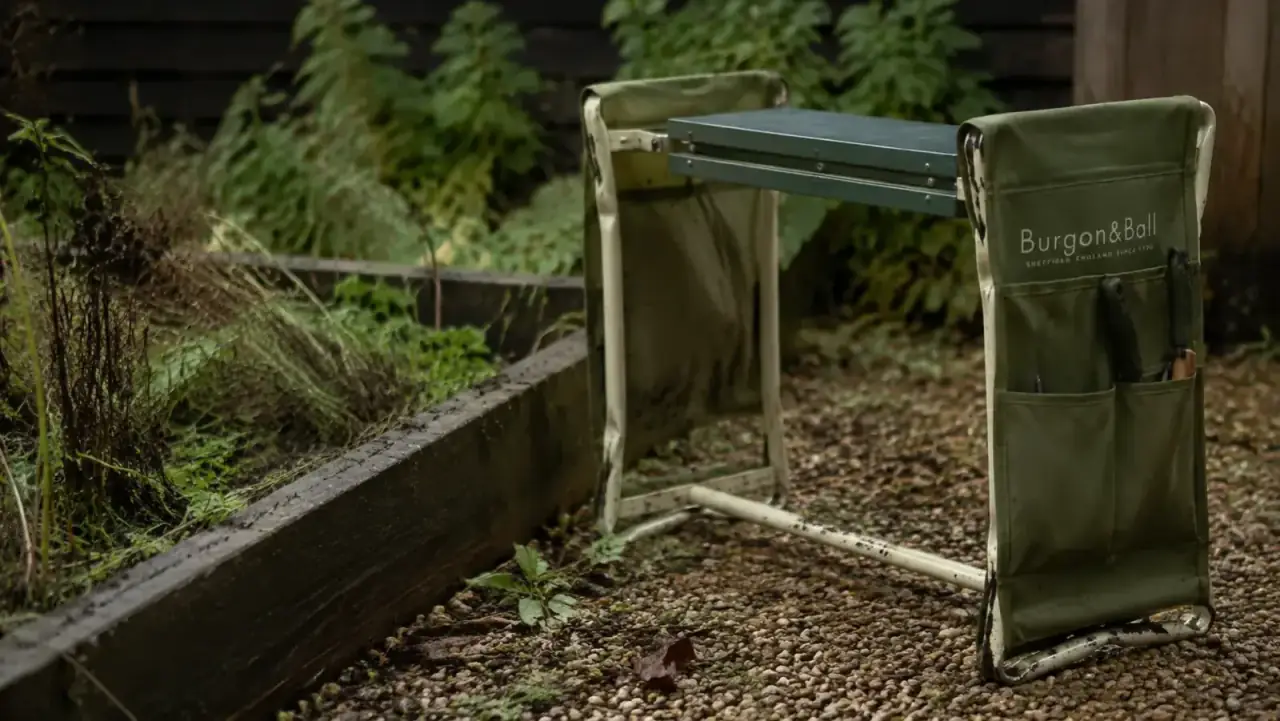
Here is the problem with shopping a product that has seven thousand reviews and a 4.7-star average: everyone who writes a glowing review wrote it in the first three weeks, right after the package arrived and everything felt solid. Nobody writes a follow-up at month six to say the hinge bolt worked loose or the foam took a permanent set. So the review distribution on the Worth Garden kneeler seat looks amazing, and the product is genuinely good, but the full picture requires a little digging into what those reviewers did not bother to mention.
I am Hollis. I have been gardening the same half-acre suburban yard for eleven years and I wear through tools at a reasonable pace -- not abusive, just consistent. I have used the Worth Garden kneeler seat for about six months: spring planting, summer weeding, a fall bulb session that had me on my knees for two full afternoons. What follows is not a repeat of the spec sheet. It is the stuff that only shows up with time.
The Quick Verdict
Genuinely useful design with one real weak spot: the hinge hardware needs attention at the start of each season or it will loosen on you.
Amazon Check Today's Price →Your knees are paying the price every time you skip this tool.
The Worth Garden kneeler seat is listed on Amazon at current pricing. If you are spending more than an hour a week on your knees in the garden, the math on protecting your joints is straightforward.
Amazon Check Today's Price on Amazon →What the Spec Sheet Gets Right
Worth Garden lists the frame as powder-coated steel, the cushion as EVA foam at roughly 2.5 inches, and the load capacity at 330 pounds. Those numbers check out on my unit. The frame has not bent under my 178-pound weight, not even when I have pushed up from the handles with more force than intended. The powder coat is still intact on the flat surfaces six months in, though the edges near the hinges show wear that I will get to shortly.
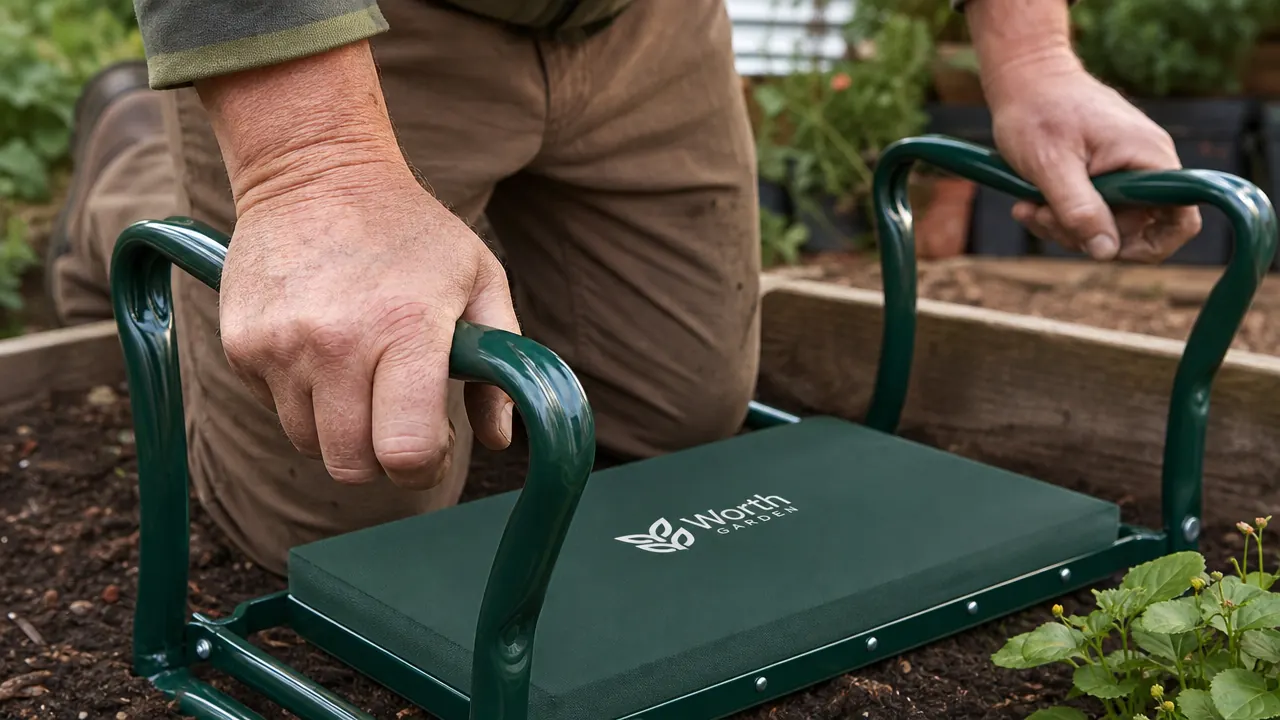
The 2-in-1 flip is the core feature: lay it flat with the cushion facing down and it is a kneeler with two side handles to push off from; flip it upright and it becomes a low bench at about nine inches off the ground, which is just right for working along a bed edge without committing your full weight to the ground. That flip mechanism is the same on every similar kneeler on the market, but Worth Garden executes it cleanly enough that it does not feel flimsy. The steel tubes are 16mm diameter, which is thicker than the cheap versions I have seen at discount stores.
The two side pouches are mesh, clip onto the side handles with plastic clips, and are large enough for a hand pruner, a small trowel, a packet of plant markers, and a folded pair of gloves. That is genuinely useful. I do not have to walk back to my cart every time I want to deadhead a few stems. The pouches are not going to survive being dragged through wet grass indefinitely, but for holding dry tools they work.
The Hinge Problem Nobody Mentions
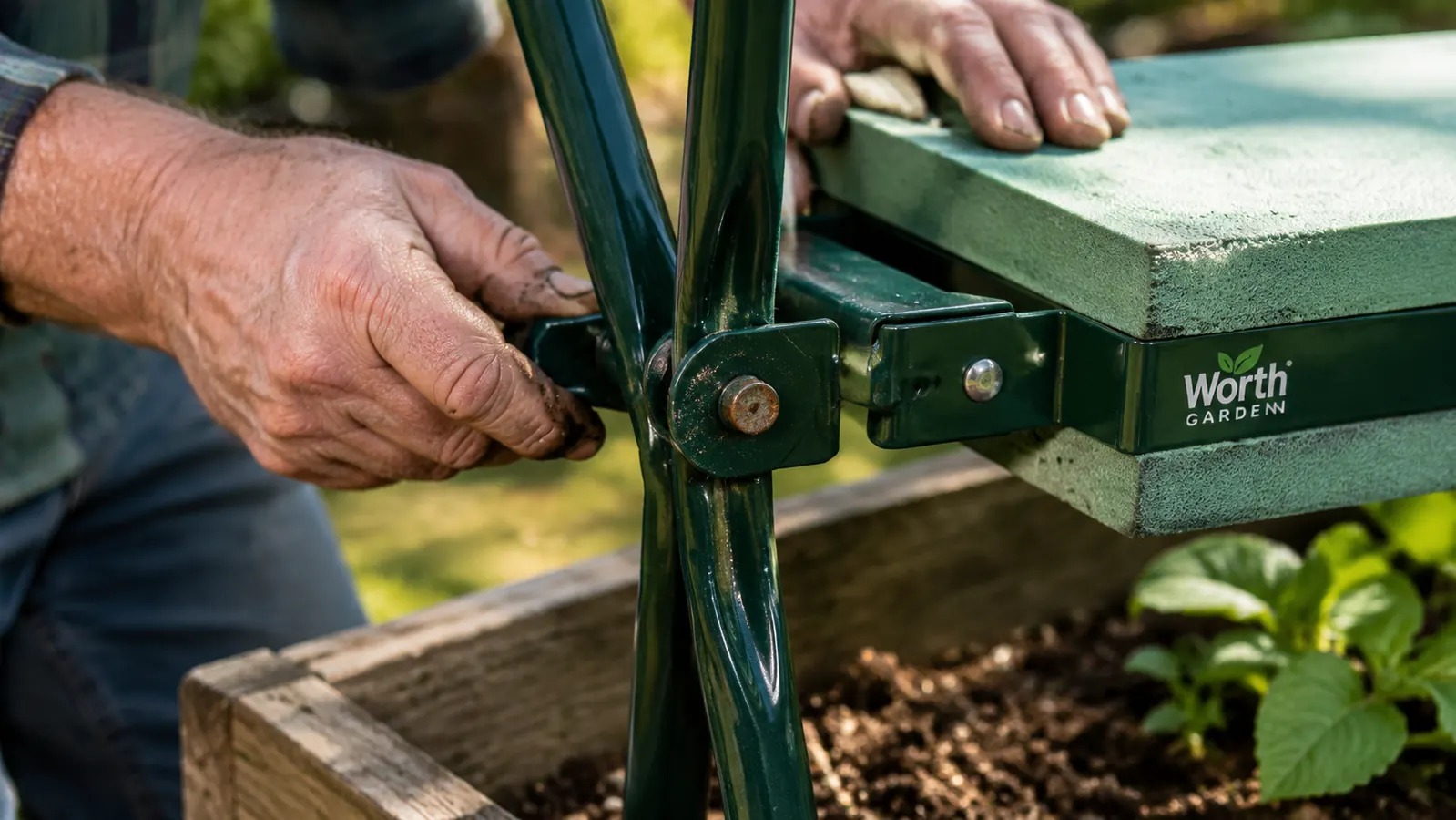
This is the section I wanted to read before I bought this. The hinges that let the kneeler flip into seat mode are secured with a bolt and a locking nut. On my unit, after about eight weeks of regular use, both bolts had loosened to the point where the whole frame had a lateral wobble when used as a seat. It did not collapse. It did not feel dangerous. But it felt sloppy enough that I noticed it every time I sat down.
The fix is a ten-cent hardware investment: buy two M8 nylon-insert locking nuts at any hardware store and swap out the stock ones. Five minutes with a socket wrench and the wobble is gone. The stock hardware is technically a locking nut already, but it is not nylon-insert, and the vibration of repeated folding and unfolding backs it off over time. This is a real limitation of the design, but it is fixable. I would have preferred Worth Garden to use better hardware from the factory.
If you buy this kneeler, do this immediately: before your first use, check that both hinge bolts are snug. Then check again at the start of each season. That is the maintenance reality the five-star reviewers are not telling you because they never used it long enough to notice.
The hinges loosened after eight weeks of regular use. The fix took five minutes and ten cents in hardware. Worth knowing before your first use.
Foam Compression Over Time
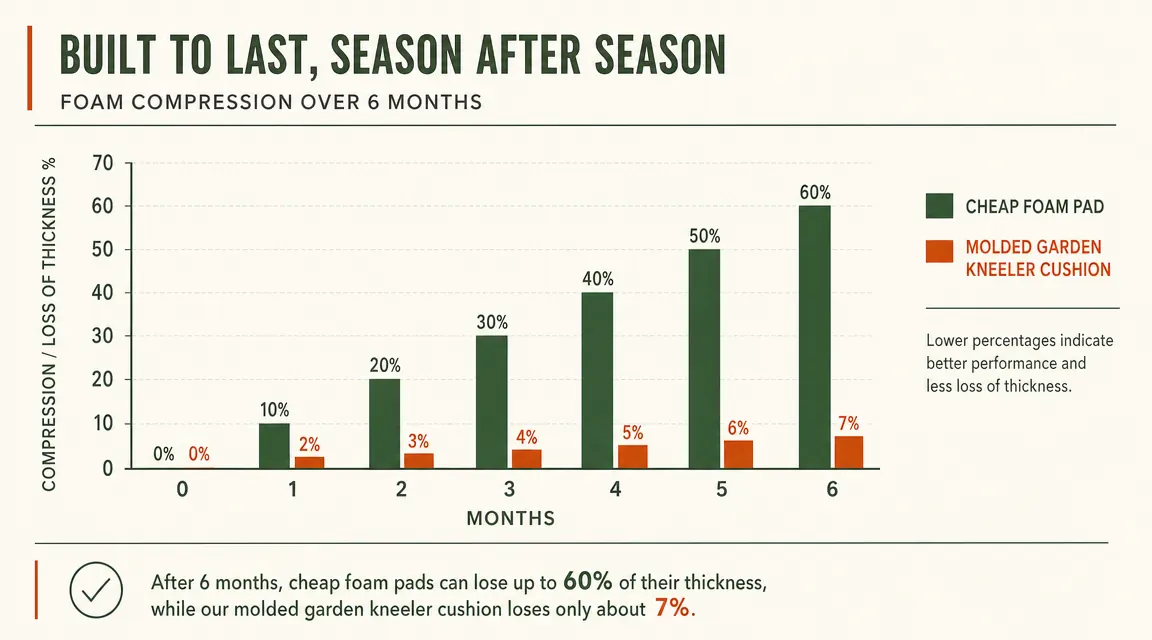
The EVA foam pad is the other part that changes with use. At month one, the cushion is noticeably thick, maybe 2.5 inches with good rebound. By month six on my unit, it has compressed to something closer to 1.75 inches in the middle, which is the spot where my kneecaps land every single time. That compression is not uniform: the edges are still plump, the center is noticeably flatter. On hard-packed clay soil, I can feel the difference.
This is not unique to Worth Garden. All EVA foam compresses under repeated point loads. But it is worth knowing because a lot of gardeners buy a kneeler specifically because they have knee issues, and the protection math changes somewhat at month six versus month one. My solution has been to swap in an aftermarket kneeling cushion on days when I am doing extended work. The frame is the valuable part. The foam is replaceable.
What It Gets Right That Matters Day to Day
Despite the hinge quirk and the foam compression, I still reach for this kneeler over a plain foam pad for most garden sessions. The reason is the handles. Being able to push off with straight arms rather than levering up from the ground is the whole point for anyone with knee or hip stiffness. I am 54 with a left knee that has started giving me opinions about prolonged kneeling. The handles make getting back up something I do without thinking, rather than something I brace for.
The seat mode adds real utility for raised-bed work. My beds are 12 inches tall, which means the nine-inch seat height puts me right at working height for transplanting starts or thinning carrots. I can sit and work with my back reasonably straight rather than stooping over from standing. That single feature probably saved me twenty minutes of lower-back recovery time this past spring.
Weight is another underrated detail. This kneeler is about 4.5 pounds. I can carry it from the shed to the back corner bed in one trip along with a bucket and a hand trowel. A heavier built version exists but I would not want it for my routine because it would become something I leave behind rather than bring along.
How It Compares to Just Using a Foam Pad
A two-dollar kneeling foam is lighter and takes up almost no storage space. It protects your knees on soft soil adequately. If you are 35, you get up from kneeling without incident, and your sessions are under 30 minutes, the case for spending on a folding kneeler seat is weak.
The folding kneeler seat earns its keep once any of these conditions apply: your sessions run longer than 45 minutes, your soil is hard-packed or clay, you have any knee or hip stiffness, or you are doing raised-bed work where you need to sit at low height rather than kneel. That profile fits most gardeners over 45 and a lot under 45 who work clay-heavy yards. If that is you, the difference is not subtle. For a deeper look at what two full seasons of actual use revealed, see the long-term kneeler seat review.
What I Liked
- Handle rails make getting up straightforward even on bad-knee days
- 9-inch seat height is genuinely useful at raised-bed working height
- 4.5-pound weight means you actually carry it instead of leaving it behind
- Mesh side pouches hold a full hand-tool setup without a second trip
- 330-pound rated frame handles real-world use without flexing
Where It Falls Short
- Hinge bolts loosen after 6-8 weeks of regular use; needs a hardware swap
- EVA foam compresses noticeably in the center by month 4-6
- Powder coat chips at hinge edges over time
- Side-pouch plastic clips feel budget-grade compared to the steel frame
- Seat height is fixed; taller gardeners may prefer something higher
What Wears Fastest and What Holds Up
At six months, ranked by condition: the steel frame is in good shape, no bending or corrosion on the tube bodies. The powder coat has chipped at the hinge attachment points, exposing bare metal, which is where any rust would start. I hit those spots with rust-inhibiting spray paint at month five and the situation is stable. The hinge bolts, as covered, needed replacing. The foam is compressed in the center but still functional. The side pouches are intact, though the plastic clip on the left one cracked along the attachment slot and is being held together by friction at this point.
If I had to rank the components by longevity: frame first, then the foam, then the pouches, then the hinge hardware. The frame is the reason you buy this over the $9 Amazon knockoffs. The hinge hardware is the reason you need to treat this as a tool that requires occasional maintenance rather than something that runs itself.

Who This Is For
You will get real value from this kneeler if you fit most of this description: you garden at least two sessions per week during the active season, you have at least some knee or hip discomfort that makes floor-level work less pleasant than it used to be, and you do raised-bed work where a low seat is actually useful rather than just nice to have. At its current price point, this is positioned as a mid-range buy that outperforms the cheap versions and costs less than the premium garden furniture category. For the uses above, that positioning is accurate. You can also check the 10 reasons a garden kneeler seat is worth it if you are still deciding whether the format fits your gardening routine.
Who Should Skip It
If you are a light-use gardener who spends under an hour a week on your knees, a quality foam pad does the job for a fraction of the cost. If you need a seat closer to standard chair height for physical reasons, the nine-inch seat will not work for you. If you garden on soft loam or raised beds with pre-amended soil, the cushioning math is more forgiving and you may find you do not need the handles to get up. And if you are someone who does not maintain tools at all, the hinge hardware issue will eventually become a real wobble problem rather than a five-minute fix.
The hinge quirk is fixable. The knee protection is real.
If you match the profile above, the Worth Garden kneeler seat holds up to regular use with minimal maintenance. Check the current price on Amazon before you decide.
Amazon Check Today's Price on Amazon →