
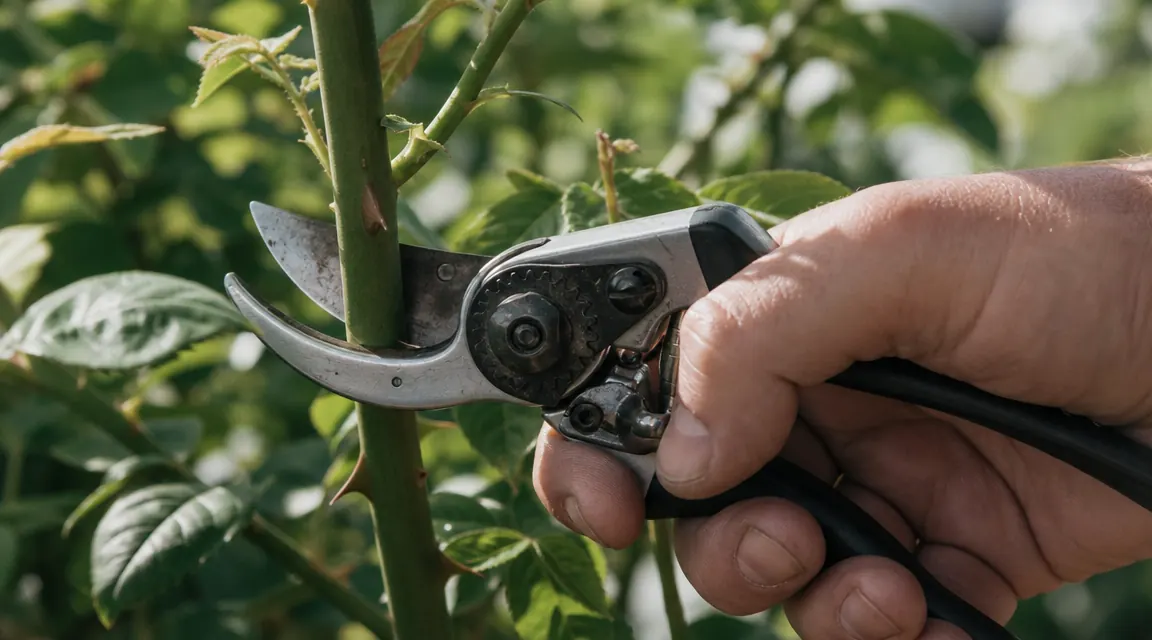
I spent three years using an anvil pruner without thinking much about it. They are everywhere in the garden center, they are cheap, and the blade looks sharp enough. Then a neighbor pointed at my rose canes and asked why so many were browning at the cut. The honest answer was the tool. An anvil pruner works by pressing a single blade down onto a flat plate. A bypass pruner works like scissors: two blades cross each other. That difference sounds minor on paper, but your plants notice it every single time.
If you are still deciding between the two or trying to convince yourself the cheaper option is fine, these 10 reasons should settle it. Every point is specific to what a home gardener actually does, from deadheading roses in June to cutting back hydrangeas before winter.
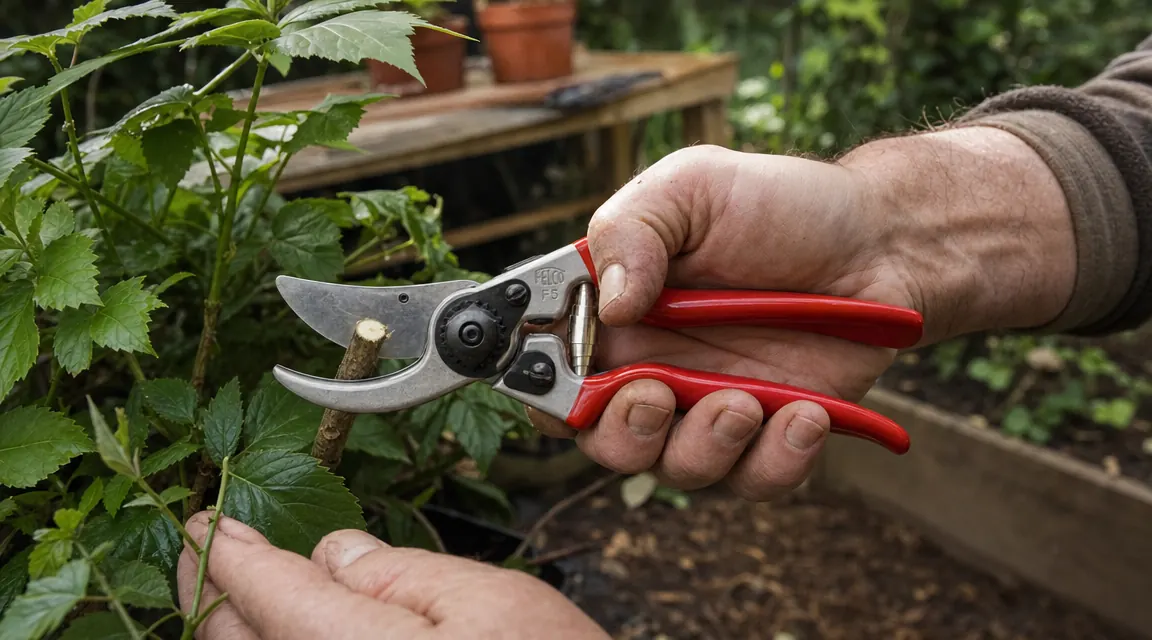
If you are switching to bypass, the Felco F5 is where most serious home gardeners land.
Swiss-made, 8.9 inches long, built for large hands, and rated 4.8 stars by more than 31,000 buyers. Replacement blades and springs are available, so the tool outlasts most anything else on the market.
Amazon Check Today's Price on Amazon →Bypass Blades Make a Clean, Single-Plane Cut
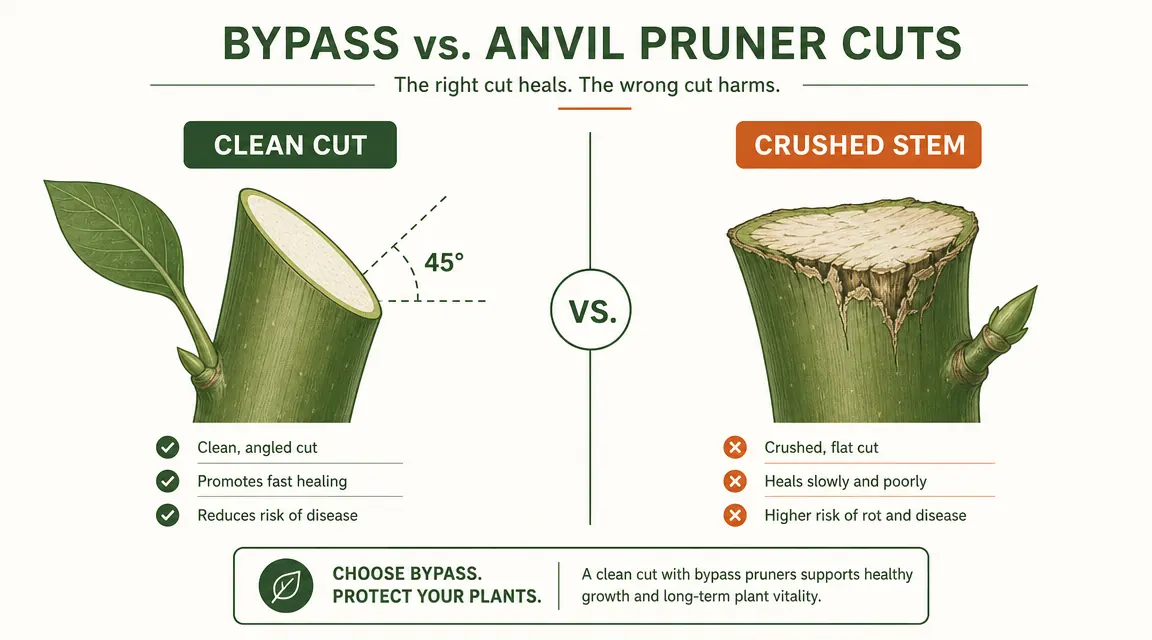
An anvil blade presses down, compressing the stem from both sides before it severs it. A bypass blade slices through on a single plane, the way a sharp knife cuts versus a mallet. The difference shows up immediately on softer stems. Deadheading a spent rose blossom with an anvil pruner leaves a ragged, partially crushed cut. A bypass pruner leaves a clean 45-degree slice that seals faster. If you want to understand the full picture of what the Felco F5 does on a season of roses, see the <a href="/felco-f5-review-long-term">long-term Felco F5 review</a>.
Less Stem Damage Means Faster Healing
Plants callus over cuts, forming a protective layer that keeps disease and insects out. A crushed stem takes longer to callus because the damaged tissue has to dry and die back before the healthy tissue underneath can seal. A clean bypass cut starts healing almost immediately. For anything you prune repeatedly across a season, roses, dahlias, perennial stems, the cumulative difference is real.
Lower Force Required per Cut
The scissors action of a bypass pruner distributes the cutting force differently than the hammer-down action of an anvil. On a branch near the cutting capacity limit, a bypass pruner typically takes less hand effort to complete the cut. That matters at the end of a two-hour pruning session when your forearms are already tired. Anvil pruners are sometimes marketed as requiring less force, which is true on very soft material, but once you hit medium-diameter woody stems, bypass wins.
Better Access to Tight Angles
The curved blade profile on most bypass pruners lets you reach into a dense shrub or crotch joint at an angle without having to align the full tool body. Anvil pruners require the blade to come straight down onto the stem. In a tightly branched climbing rose or a crowded hydrangea, that geometric requirement forces you to wrestle the branch into position rather than reaching cleanly to the cut point.
The Right Tool for Living Wood
Anvil pruners are actually good at something: cutting dry, dead wood. The crushing action works fine when the material has no living tissue to protect. But everything a home gardener prunes on a regular schedule, roses, fruit trees, flowering shrubs, perennial stems, is living wood. Using the right blade design for living wood is not fussiness, it is basic plant care.
An anvil pruner is a good tool for dead wood. Everything in my garden is alive. That is why I switched.
Easier to Sharpen and Keep Sharp
A bypass pruner has a single cutting blade and a flat counter blade. You sharpen the beveled edge of the cutting blade, usually with a diamond file or a sharpening stone, in about two minutes. An anvil pruner has a double-beveled blade that presses onto a soft metal plate. The plate deforms over time, and the blade geometry is harder to maintain without sending it back or replacing parts. The Felco F5 ships with a replaceable blade and spring, so you never have to decide when to retire the whole tool.
Sap and Resin Clear More Easily
After cutting sticky stems like flowering shrubs or citrus, sap builds up on the blade. On a bypass pruner, you can wipe each blade individually. On an anvil pruner, sap collects in the joint between blade and plate and is harder to clean out fully. Sticky residue left on blades accelerates rust and transfers between plants, which can spread disease. It is a small maintenance edge but it adds up across a season.

More Predictable Cutting Capacity
Most bypass pruners are rated to cut stems up to 3/4 inch or 1 inch in diameter. That spec is actually close to real-world performance because the blade does not rely on crushing force to finish the cut. Anvil pruner capacity ratings tend to be optimistic because the crushing mechanism performs inconsistently depending on stem moisture content, hardness, and the exact blade alignment. A bypass pruner rated for 3/4-inch wood will do 3/4-inch wood reliably.
Better Long-Term Value When You Buy Quality
A $9 bypass pruner is still a bypass pruner, and it will eventually loosen, rust, or dull beyond what resharpening can fix. But when you step up to a quality bypass pruner like the Felco F5, you are buying a tool with replaceable blades, springs, and bumpers. The handle will not crack, the pivot bolt stays tight, and the spring tension is adjustable. Anvil pruners rarely get that kind of parts support because the design is considered disposable. For a deeper look at how the Felco compares to budget bypass options, the <a href="/felco-f5-vs-fiskars-pruner">Felco F5 vs Fiskars comparison</a> covers both tools across the same pruning tasks.
Your Hands Will Thank You at the End of the Season
Repeated hand fatigue from pruning is real. The crushing motion of an anvil pruner, especially on stems near the capacity limit, creates a jarring impact at the end of each stroke when the blade bottoms out on the plate. Bypass pruners follow through past the cut point without that impact. Over a hundred cuts in a single session, the difference in hand and wrist strain is noticeable. Gardeners with arthritis or weak grip strength notice it in the first ten minutes.
What I Would Skip
I am not saying throw out every anvil pruner you own. If you have one and you are cutting back dead rose canes in late winter or clearing dry bramble, it will do the job fine. The problem is using it as your everyday pruner for living stems across the season. That is where the damage accumulates. One other thing: do not confuse the blade design with the price. Bypass pruners exist at every price point. A cheap bypass pruner will still outperform a cheap anvil pruner on living wood. The blade geometry is the feature, not the brand or the price tag.
The Felco F5 is the bypass pruner most serious home gardeners keep for years.
All-steel Swiss construction, 8.9 inches, built for large hands, with field-replaceable blades and springs. More than 31,000 reviews at 4.8 stars. If you are done replacing cheap pruners every other season, this is the one to buy.
Amazon Check Today's Price on Amazon →